Hotline:15078906688
E-mail:282911489@qq.com
- All
- Product Management
- News
- Introduction
- Enterprise outlets
- FAQ
- Enterprise Video
- Enterprise Atlas


Blog
BEIHAI YUEDA FRP PRODUCTS
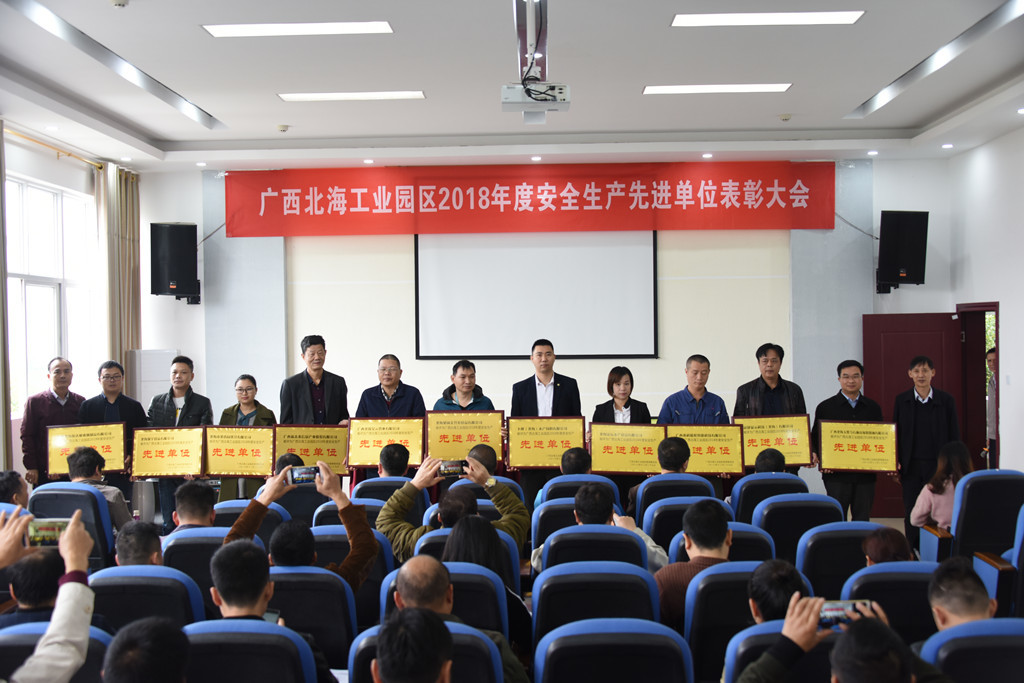
Beihai Industrial Park 2018 Annual Safety Advanced Unit Award Ceremony
On the morning of January 15, 2019, the Management Committee of the Beihai Industrial Park in Guangxi held a commendation conference for advanced units in safety production at the meeting room on the second floor of the Employee Home of the China Electronics Beihai Industrial Park. Attendees included heads of enterprises in the park and enterprise leaders responsible for safety production, with leaders such as Liu Xinguo, Secretary of the Management Committee, and Peng Yilin, an inspector, present at the meeting. The conference recognized 19 advanced units in safety production for the year 2018, including Guangxi Sanuo Electronics Co., Ltd. and Guangxi Beihai Yueda FRP Products Co., Ltd. During the meeting, Secretary Liu Xinguo and Inspector Peng Yilin presented awards to the winning units and delivered important speeches.
2019/01/15

The application prospects and current status of pultruded fiberglass products in our country.
The pultrusion molding process is a special process in the fiberglass molding technology, suitable for producing fiberglass profiles with the same cross-sectional shape, such as rods, tubes, solid profiles (I-shaped, U-shaped, square profiles) and hollow profiles, etc. Its advantages are: 1. The production process is continuous, ensuring stable product quality and good repeatability; 2. The content of reinforcing materials can be adjusted according to requirements, resulting in high product strength; 3. The longitudinal and transverse strength of the products can be adjusted to meet different usage requirements; 4. It can produce products with complex cross-sectional shapes to meet the requirements of special occasions; 5. The products have good integrity, and the utilization rate of raw materials is high.
2019/01/14
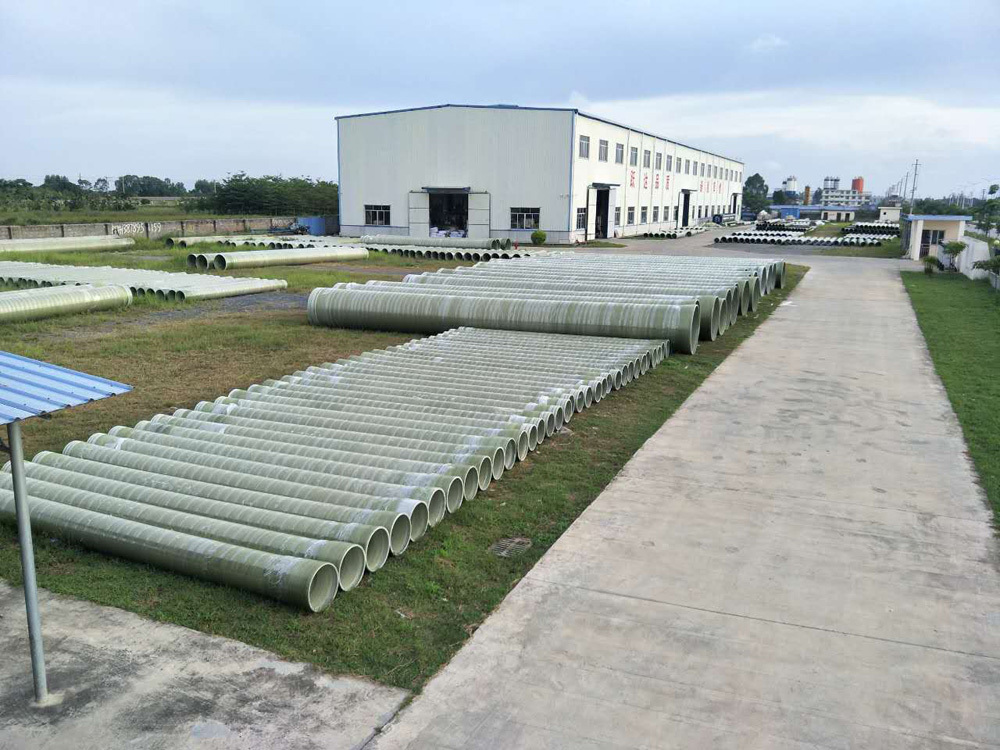
With the rapid development of the international economy, the demand for composite materials in the industrial sector has increased, leading to rapid advancements in this field. Fiberglass pipes, as a basic material with excellent comprehensive performance, possess unique advantages that allow them to be widely used even in complex industrial environments. Therefore, the emergence of fiberglass pipes has a significant impact on the development of contemporary society, and they are widely promoted and applied in various industrial fields such as chemical engineering, petroleum, metallurgy, papermaking, and urban water supply and drainage. The history of fiberglass pipes in our country can be traced back 40 years, when small-diameter fiberglass pipes were produced using manual lamination. In the past decade, the fiberglass pipe industry in our country has...
2019/01/11

The impact of the accelerated development of rail transit on the lightweight fiberglass industry.
With the acceleration of urbanization in China, the demand for urban transportation has surged, and urban rail transit has entered a period of rapid development. The correct guidance of national policies and the active efforts of relevant cities in planning and constructing rail transit have shown a healthy and rapid upward trend in the development of urban rail transit in China in terms of speed, scale, and modernization level. The rapid rise of high-speed rail and urban rail transit has opened up new opportunities for non-metallic chemical materials, especially lightweight fiberglass materials. Urban rail transit in China is a systematic project that involves various fields of industry. Its scope covers locomotives, vehicles and components, rail transit transportation and management technology, infrastructure and electromechanical equipment, construction materials for urban rail transit, equipment, safety, energy-saving, environmental protection technology and maintenance, as well as planning, design, consulting, supervision services, engineering construction machinery and supporting equipment. Overall, it can be summarized into three major engineering categories: tunnel engineering, track engineering, and vehicle movement engineering. These three major projects have gathered domestic enterprises and attracted participation and cooperation from many well-known companies from Germany, France, Italy, Austria, Sweden, Switzerland, Belgium, Japan, Israel, the United States, Canada, South Korea, and other countries and regions. The speed of China's high-speed rail has reached 350 kilometers per hour, and the rapid operation of high-speed trains has made lightweight materials an important component. The three major lightweight materials are aluminum alloy, plastic, and fiberglass, with fiberglass becoming the main material for interior structural components. Currently, a modular series of products, passenger car seat series products, washroom series products, driver’s cab and driver’s compartment series products, sound insulation series products, and export products have been formed. Zhao Honghan, deputy secretary-general of the China Unsaturated Polyester Resin Industry Association, pointed out that to meet the high-quality performance requirements of supporting components for high-speed trains and light rail subways, China's fiberglass technology and products have been comprehensively improved in terms of raw material selection, structural design, and process molding. It is understood that there are more than 40 domestic fiberglass companies supporting the high-speed rail and light rail subway industries, forming a complete fiberglass industrial chain for rail transit. Zhao Honghan revealed that authoritative information obtained from relevant sources shows that the lightweight levels of boats differ significantly between domestic and international standards. "For example, in the case of lifeboats equipped with the same engine, the same type of boat built in China and Norway has different speeds; the lifeboat built in China can only reach a speed of 6 knots, while the one built in Norway can reach 11 knots." Using this example for comparison, it is clear that advancing the breadth and depth of lightweight rail transit in China still has a long way to go, and domestic fiberglass companies have great potential to seize the opportunities presented by the rapid development of rail transit.
2019/01/07
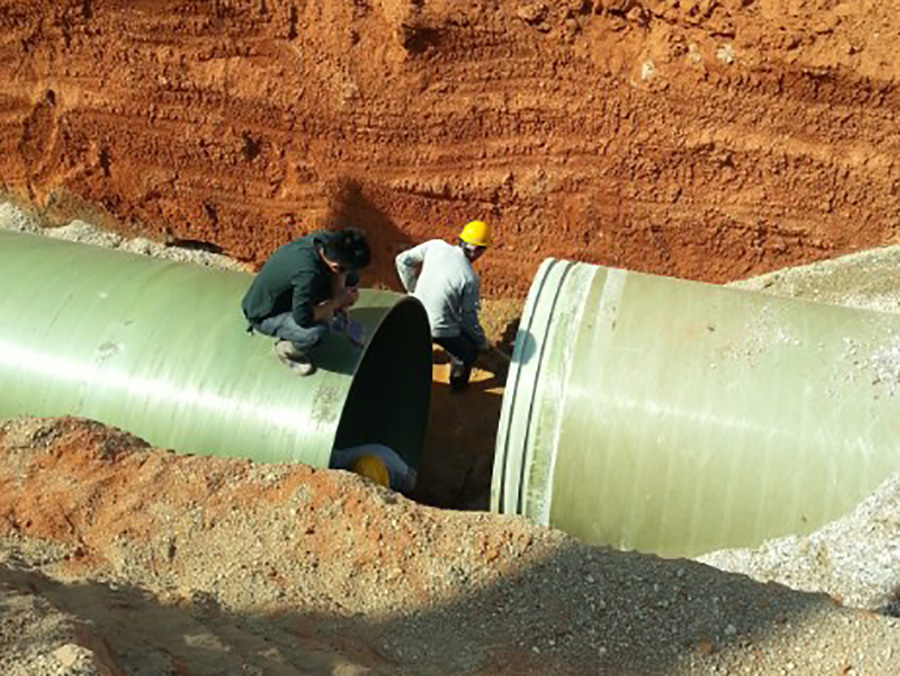
The application of anti-corrosion fiberglass products in various fields.
Corrosion is ubiquitous, and the losses caused by corrosion each year are enormous: according to surveys from industrialized countries, the economic losses due to corrosion account for about 2-4% of their gross national product annually. In our country, the economic losses caused by corrosion amount to at least 200 billion yuan each year. Therefore, exploring new anti-corrosion measures and reducing losses caused by corrosion has always been a topic of effort for people. With the introduction of manufacturing equipment and technology for anti-corrosion fiberglass raw materials and products, the types and applications of anti-corrosion fiberglass products are becoming increasingly widespread in various sectors of the national economy. For different corrosive environments, selecting different resins to make fiberglass generally meets the anti-corrosion requirements, thus ensuring that fiberglass has a wide range of applicability in corrosion resistance. 1. Application of anti-corrosion fiberglass in the metal surface treatment industry: The acids used in metal surface treatment are mostly hydrochloric acid, and there are basically no issues using fiberglass. 2. Application of anti-corrosion fiberglass storage tanks in the high-purity water and food sectors: The excellent corrosion resistance of fiberglass means that this material has active and non-polluting characteristics, making it a suitable material for storing highly clean items such as high-purity water, pharmaceuticals, and milk. 3. Application of anti-corrosion fiberglass storage tanks and towers in the chlor-alkali industry: The chlor-alkali industry is one of the earliest application fields of fiberglass as a corrosion-resistant material, and fiberglass has now become a primary material in this industry. As early as the early 1950s, fiberglass was first used to collect hot (93°C) and humid chlorine gas, as well as organic substances from the mercury electrode. Subsequently, fiberglass was used to replace concrete electrolytic cell covers, solving the problem of concrete debris falling into the electrolytic cells after corrosion. Since then, fiberglass has gradually been used in various piping systems, gas blower mobility, heat exchanger shells, brine tanks, as well as in pumps, pools, floors, wall panels, grates, handles, railings, and other structural components. At the same time, fiberglass has also begun to enter various fields of the chemical industry. 4. Application of anti-corrosion fiberglass storage tanks and pipelines in the paper industry: The paper industry uses wood as raw material, and the papermaking process requires acids, salts, bleaching agents, etc., which have a strong corrosive effect on metals, while fiberglass materials can withstand harsh environments such as those with bactericides. 5. Extensive application of anti-corrosion fiberglass in the environmental protection industry: In the environmental protection industry, anti-corrosion fiberglass has been widely used in water supply and drainage pipeline projects. In recent years, the types of corrosive media and corrosion performance of wastewater have been continuously increasing, which requires the use of materials with better corrosion resistance, and anti-corrosion fiberglass is a good material to meet this demand. Applications of anti-corrosion fiberglass materials in environmental protection include general industrial waste gas treatment, oil-water treatment, and urban wastewater deodorization treatment. 6. Application of anti-corrosion fiberglass pipelines in seawater desalination: Since seawater easily corrodes iron materials, most of the pipelines and containers in desalination plants use fiberglass pipelines. 7. Application of anti-corrosion fiberglass storage tanks and pipelines in the pharmaceutical industry: There are many types of pharmaceuticals, each with its own raw materials, and fiberglass can well meet the anti-corrosion requirements in the pharmaceutical industry.
2019/01/04
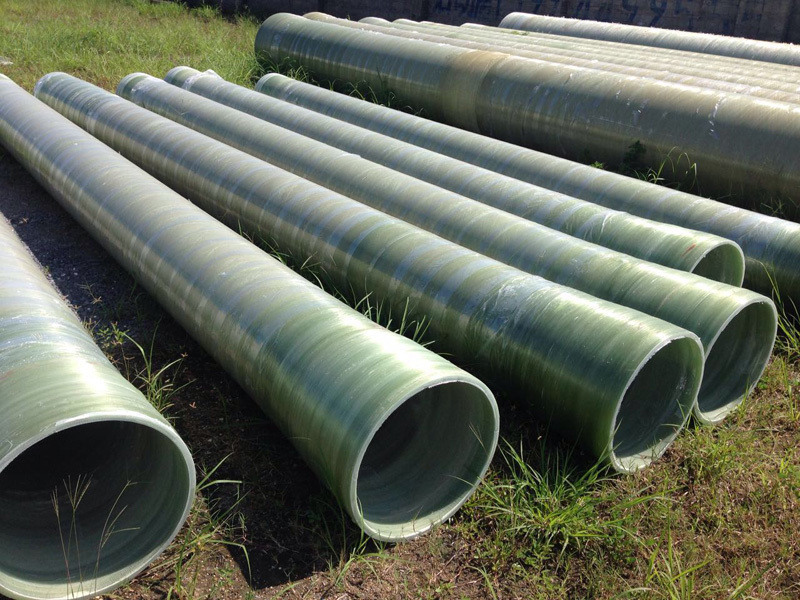
A Brief Discussion on the Influencing Factors of the Development of the Fiberglass Products Industry
Factors Influencing the Development of the Fiberglass Products Industry
2019/01/02
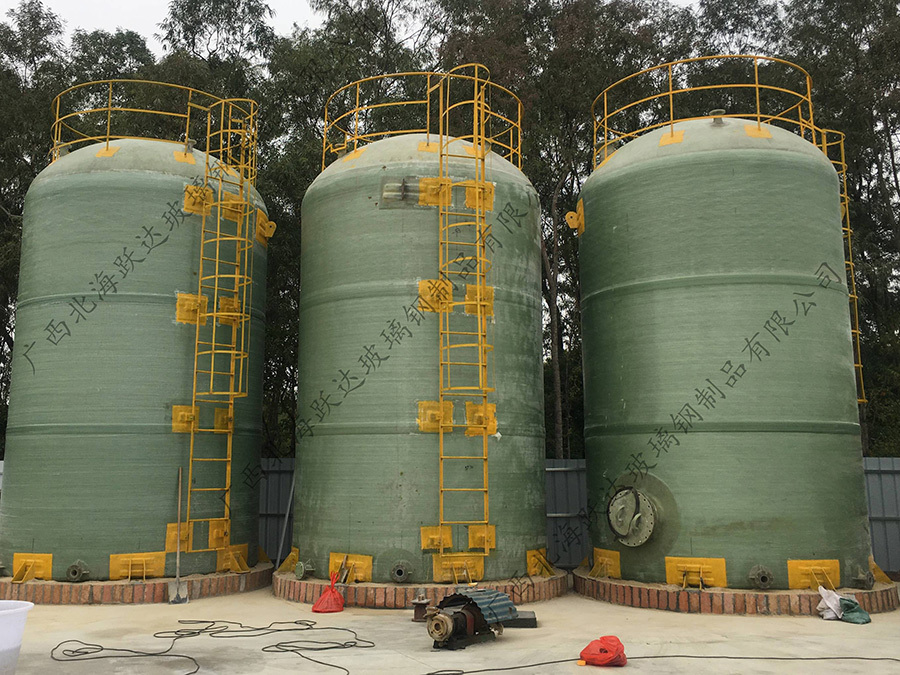
What is the difference between FRP sand-filled pipe and HDPE double-wall corrugated pipe?
The differences between fiberglass reinforced sand pipes and HDPE (High-Density Polyethylene) double-wall corrugated pipes are as follows: 1. **Material Composition**: - Fiberglass reinforced sand pipes are made from a composite material that combines fiberglass and sand, providing high strength and durability. - HDPE double-wall corrugated pipes are made from high-density polyethylene, which is a type of plastic known for its flexibility and resistance to chemicals. 2. **Strength and Durability**: - Fiberglass pipes are generally stronger and can withstand higher pressures and temperatures compared to HDPE pipes. - HDPE pipes are flexible and can absorb shocks, making them suitable for various applications, but they may not handle extreme conditions as well as fiberglass pipes. 3. **Weight**: - Fiberglass pipes tend to be heavier due to their composite material, which can make installation more challenging. - HDPE pipes are lightweight, making them easier to transport and install. 4. **Corrosion Resistance**: - Fiberglass pipes have excellent resistance to corrosion and can be used in harsh environments. - HDPE pipes also have good corrosion resistance but may be affected by certain chemicals over time. 5. **Cost**: - Fiberglass reinforced sand pipes are usually more expensive due to the materials and manufacturing processes involved. - HDPE pipes are generally more cost-effective, making them a popular choice for many applications. 6. **Applications**: - Fiberglass pipes are often used in industrial applications, wastewater treatment, and areas requiring high strength. - HDPE pipes are commonly used in drainage, sewage, and water supply systems due to their flexibility and ease of installation.
2018/12/28
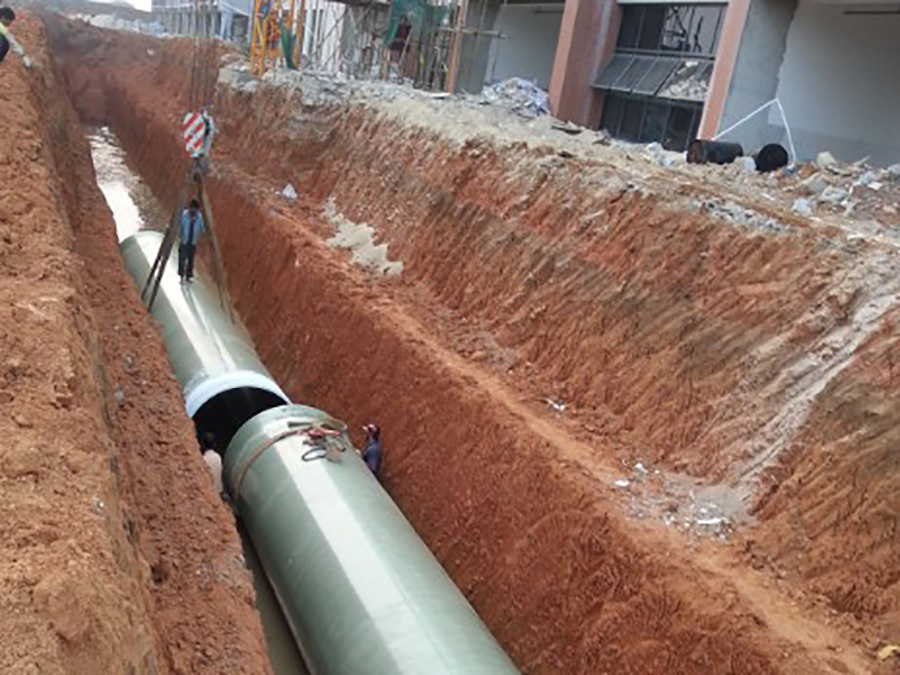
Installation Methods for FRP Pipes and FRP Sand-Embedded Pipes
1. Installation methods for fiberglass reinforced plastic (FRP) pipes and fiberglass reinforced plastic sand-coated pipes: ① Before construction, the appearance and dimensions of the FRP pipes should be inspected and accepted according to the factory quality certificate. ② The pipeline installation drawings serve as the basis for the pipeline installation project. The laying of FRP/PVC pipes (including connection forms, coordinates, elevation, slope, direction, etc.), the connection between FRP/PVC pipes and equipment, and the installation positions and supports of pipeline accessories must all comply with the design drawings. Any changes must be resolved in consultation with the design unit. ③ Pipeline installation can be carried out sequentially from one end of the pipeline according to the sections defined in the pipeline installation drawings, installing pipeline accessories in order.
2018/12/27
recommend News

WeChat Public Number
Mobile website
Contact Us
Telephone:0779-2096111
Mailbox:282911489@qq.com
Address: 200 m north of the intersection of Hong Kong Road and Southwest Avenue in Beihai Industrial Park


©2023 Guangxi Beihai Yueda FRP Products Co., Ltd. All rights reservedSEO Tags